Introduction
Kitchen appliances have a tendency to accumulate. A slow cooker here, a rice cooker there, a steamer basket that gets used twice a year, a yogurt maker that seemed like a good idea at the time. Before long, the cabinet above the refrigerator is a chaotic archive of single-purpose appliances competing for space, and the question of which one to actually pull out for any given meal becomes its own small problem.
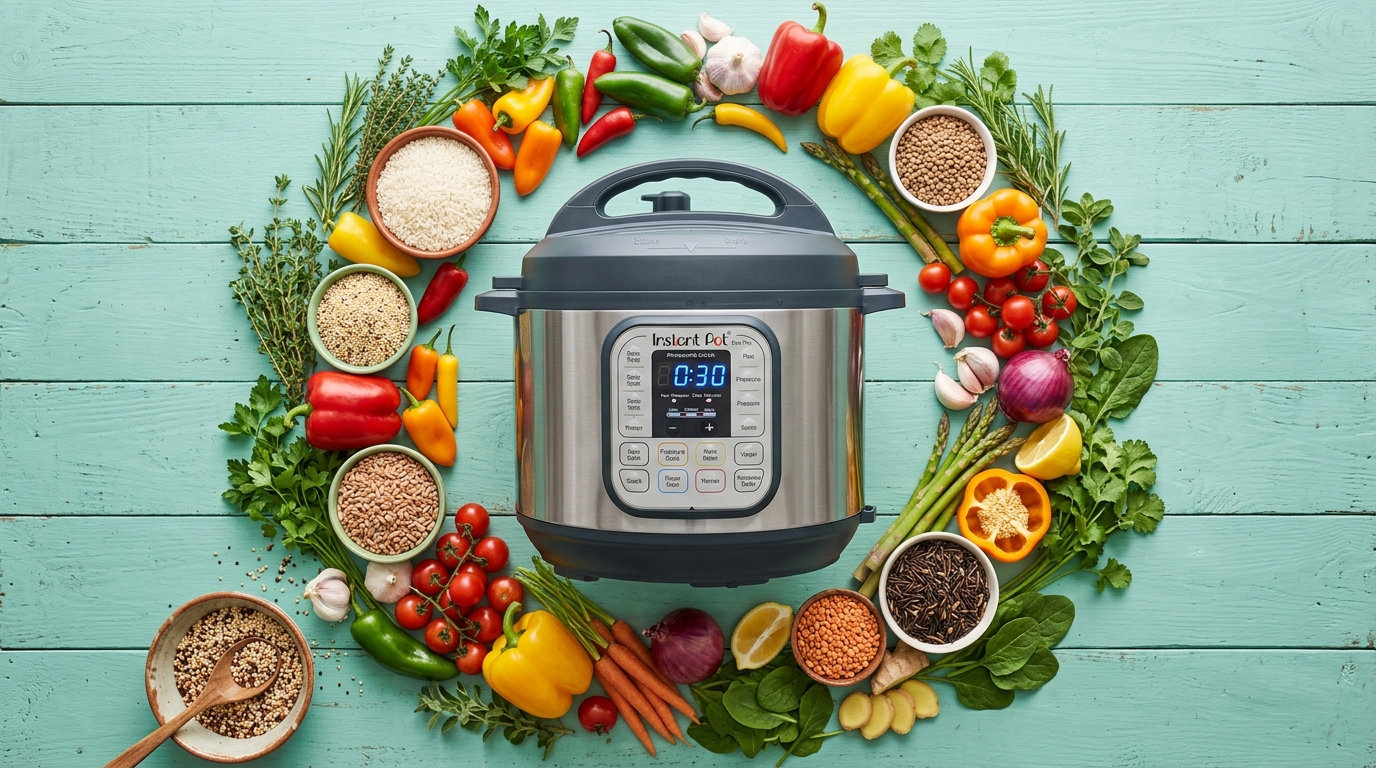
The Instant Pot concept addressed this directly when it arrived, and the Duo Plus represents the most complete expression of that idea in the current lineup. Nine functions in a single 6-quart stainless steel unit — pressure cooking, slow cooking, rice making, steaming, sautéing, yogurt making, warming, sterilizing, and a sous vide function that takes the appliance into territory even the standard Duo doesn’t reach. It’s a machine designed around the premise that one well-engineered multicooker should be able to handle the realistic range of what a household cooks, without requiring a separate appliance for each task.
Whether that premise holds up in practice — and for which households it holds up best — is what this article explores. The Duo Plus is a capable and genuinely versatile appliance, but understanding what it does well, where its limitations lie, and who it actually suits is more useful than a features list alone.
What Is the Instant Pot Duo Plus 9-in-1?
The Duo Plus is a step above the standard Duo 7-in-1 in the Instant Pot lineup, adding two additional functions — sous vide and a sterilize upgrade — and incorporating a blue LCD display that provides more detailed feedback during cooking cycles than the standard model’s simpler indicator system. It maintains the same core 6-quart capacity, stainless steel construction, and K-Cup pod ecosystem — sorry, K-Cup is the wrong reference — stainless steel inner pot that has made the Duo line popular across millions of households.
The “9-in-1” designation reflects the expanded function count: pressure cooker, slow cooker, rice and grain cooker, steamer, sauté pan, yogurt maker, food warmer, sterilizer, and sous vide. Each of these represents a genuinely distinct cooking method with its own temperature and timing requirements, and the Duo Plus’s programming addresses each individually rather than applying a one-size-fits-all approach across different cooking tasks.
It connects to Instant Pot’s companion app, which provides access to over 800 recipes specifically developed for the appliance — a resource that’s particularly valuable for new owners who aren’t yet sure how to translate their existing recipes for pressure or slow cooking.
Key Features of the Instant Pot Duo Plus 9-in-1
Pressure Cooking at Two Levels
Electric pressure cooking is the function that defines the Instant Pot category and continues to be the most transformative capability for most households that own one. By sealing the cooking environment and building steam pressure, the internal temperature rises above the normal boiling point of water, which dramatically compresses cooking time for foods that would otherwise require extended conventional cooking.
The Duo Plus operates at two pressure levels — high and low — with high pressure being appropriate for the majority of pressure cooking applications. Tough cuts of beef that would require three hours of oven braising become fork-tender in 45 to 60 minutes under pressure. Dried beans that need overnight soaking and an hour of stovetop simmering are done in 30 to 40 minutes without pre-soaking. A whole chicken that would take 90 minutes in the oven cooks through in under 30 minutes under pressure.
Low pressure is reserved for more delicate foods — fish, eggs, and certain vegetables that would overcook at high pressure before the interior reaches the right texture.
The Duo Plus maintains the same pressure performance as the standard Duo while adding the visual feedback of the blue LCD display, which shows more detailed information about the cooking stage and remaining time than the simpler indicator system.
Slow Cooking
The slow cook function takes the opposite approach to pressure cooking in terms of speed but occupies the same space in terms of practical household value. Low, sustained heat over four to ten hours produces the kind of deeply flavored, tender results that define slow cooker cooking — pulled pork that falls apart, beef stew where the connective tissue has completely dissolved into the braising liquid, chili where the spices have had hours to bloom and integrate.
For households with reliable morning routines, loading the Duo Plus before leaving for work and returning to a finished dinner is a well-established and genuinely convenient pattern that the slow cook function supports directly. The round pot shape and heating characteristics differ slightly from traditional oval slow cookers, and some recipes developed specifically for Crock-Pot style cookers may require minor adjustment, but the function covers the same practical territory effectively.
Rice and Grain Cooking
The rice function handles standard white rice reliably, producing consistently fluffy results through an automated cycle that times the cooking and transitions to warm when done. Brown rice and other whole grains use the pressure cook function with adjusted water ratios and times rather than a dedicated grain setting — a minor distinction that matters when someone is looking for a dedicated grain button and doesn’t find one labeled that way.
The Duo Plus’s rice cooking produces results comparable to a dedicated rice cooker for most everyday rice preparation, though households for whom rice quality is a primary daily concern and who cook multiple varieties regularly may find a dedicated fuzzy logic rice cooker produces more precisely optimized results for specialty varieties.
Steam Function
The steam function, combined with the included trivet steam rack, allows foods to cook using moist heat above the water level rather than submerged in it. Vegetables retain more nutrients and texture when steamed rather than boiled. Dumplings, tamales, and similar steam-specific foods cook properly in this mode. Fish fillets steam gently and emerge moist rather than overcooked.
One of the most consistently praised steam applications in the Instant Pot ecosystem is hard-boiled eggs. Eggs steamed under low pressure for a brief cycle produce shells that peel more easily than traditionally boiled eggs — a discovery that surprises many new owners and quickly becomes a regular use.
Sauté Function
The sauté function heats the inner pot directly at higher temperatures than cooking functions, enabling browning, searing, and sauce reduction within the same vessel that will be used for pressure or slow cooking. This is the feature that makes the Duo Plus genuinely useful for recipes that benefit from building flavor through browning before the main cooking method begins.
Searing a chuck roast before pressure cooking it produces a meaningfully better result than going straight from raw meat to pressure cooker — the Maillard reaction creates flavor complexity that can’t develop under the moist, sealed conditions of pressure cooking. The sauté function handles this step without requiring a separate pan, keeping the entire recipe within one pot.
Three sauté temperature levels — less, normal, and more — accommodate different applications from gentle softening of aromatics to high-heat searing of proteins.
Yogurt Making
The yogurt function is the most niche-seeming of the nine, but it has developed a genuine following among households that have discovered homemade yogurt. The process uses the appliance’s ability to maintain precise low temperatures for extended periods — first to heat milk to pasteurization temperature, then to cool and hold it at incubation temperature for the bacterial culture to work over several hours.
The result is plain yogurt that can be eaten as-is, strained into Greek-style thickness, sweetened and flavored to preference, or used as a cooking ingredient. Homemade yogurt is generally lower in added sugar than commercial versions, and the cost per batch is substantially lower than purchasing equivalent quantities of commercial yogurt regularly. For households that consume significant amounts of yogurt, this function has genuine financial and quality value over time.
Sterilizer Function
The sterilize function uses sustained high heat to sterilize items that require it — baby bottles being the most common household application, along with glass jars for canning preparation and other items that benefit from heat sterilization beyond normal cleaning. This function is an upgrade from the standard Duo’s approach to sterilization and provides a more dedicated, calibrated sterilization cycle.
For households with infants or those who do home canning, this function adds practical value. For others, it’s a capability available when needed without being central to daily use.
Sous Vide Function
This is the function that most clearly distinguishes the Duo Plus from the standard Duo, and it represents the most technically sophisticated cooking method in the appliance’s repertoire. Sous vide cooking involves sealing food in an airtight bag and submerging it in precisely temperature-controlled water for extended periods — typically longer than conventional cooking at the same doneness target.
The technique produces results that are difficult to achieve through conventional cooking: chicken breast that is consistently moist and tender throughout rather than dry at the edges and properly cooked only at the center, steak cooked to an exact internal temperature edge-to-edge before a brief sear, salmon that holds together perfectly rather than overcooked on the outside while the center catches up.
The Duo Plus’s sous vide function maintains water at precise temperatures within a fraction of a degree — the precision that makes the technique work. For household cooks who have been curious about sous vide but haven’t wanted to invest in a dedicated immersion circulator, the Duo Plus provides that capability within the multicooker they’re already using.
Keep Warm Function
After any cooking cycle, the Duo Plus automatically transitions to keep warm mode, maintaining food at a safe serving temperature without continuing to cook. Given that pressure cooking and slow cooking both involve cooking significant quantities of food that may not be consumed immediately, this transition is both a practical and food safety consideration.
The blue LCD display on the Duo Plus shows elapsed time in warm mode, which helps users track how long food has been held and make informed decisions about when to serve or refrigerate.
Blue LCD Display
The upgraded display on the Duo Plus provides more detailed real-time feedback than the standard Duo’s simpler indicator system. Cooking stage, remaining time, temperature in sous vide mode, and other relevant information display clearly, which is particularly useful for new users learning the appliance’s cooking cycle stages and for sous vide applications where precise temperature monitoring matters.
How the Instant Pot Duo Plus Can Be Used
Transforming Tough, Inexpensive Cuts of Meat
This is where the Duo Plus delivers the most dramatic results relative to conventional cooking methods, and for budget-conscious households it’s arguably the single most impactful capability. Chuck roast, pork shoulder, lamb shank, beef short ribs, oxtail — cuts that are inexpensive precisely because they’re too tough for quick cooking methods — emerge from the pressure cooker in a fraction of the conventional braising time, fork-tender and rich with flavor from the braising liquid.
The combination of the sauté function for initial searing and the pressure cook function for the main cooking creates a complete one-pot braise that would conventionally require an oven, a Dutch oven, and several hours of largely unattended time. The Duo Plus compresses that timeline to under an hour of active cooking while producing comparable results.
Building a Weekly Meal Prep Foundation
The 6-quart capacity and multi-function design make the Duo Plus a natural centerpiece for weekly meal prep routines. A batch of shredded chicken pressure cooked in 20 minutes becomes the protein for multiple meals throughout the week — tacos, grain bowls, salads, wraps. A large pot of dried beans cooked from dry in 40 minutes provides a week’s worth of plant protein. Stock made from vegetable scraps or chicken bones in under two hours replaces store-bought broth across the week’s cooking.
The efficiency of the pressure function compresses the time investment of batch cooking significantly, and the appliance’s ability to transition automatically to warm means food can finish cooking and hold temperature without requiring the cook to be present at the exact moment the cycle completes.
Slow Cooking for Hands-Off Weekday Dinners
The slow cook function serves a different scheduling need than pressure cooking — it’s built for the scenario where you have morning time to prepare ingredients but need dinner ready when you return in the evening. Beef stew, chicken cacciatore, pulled pork, white bean soup, and similar slow-cook-appropriate dishes develop deep flavor over six to eight hours of low, slow heat, requiring essentially no attention after the initial setup.
For working households where evening cooking time is genuinely compressed, the ability to delegate an entire dinner to the Duo Plus during the workday has meaningful practical value that goes beyond any specific recipe.
Making Homemade Yogurt in Quantity
A standard 1-quart or half-gallon of milk produces a meaningful quantity of yogurt in a single Duo Plus cycle. The process involves heating the milk, adding a starter culture, and then leaving the appliance to incubate the yogurt for eight to twelve hours — typically overnight. Waking up to a finished batch of homemade yogurt that can be strained, portioned, and refrigerated for the week makes the process extremely low-friction once the habit is established.
Exploring Sous Vide Technique
For households curious about sous vide but reluctant to purchase a dedicated immersion circulator, the Duo Plus provides a legitimate entry point. Chicken breast cooked sous vide at 145°F for 1.5 hours produces moist, consistently cooked results that conventional pan cooking rarely matches. A steak cooked to 130°F throughout and then briefly seared in a hot pan produces edge-to-edge medium-rare that home cooks find difficult to achieve through conventional methods.
The learning curve for sous vide is modest — the primary requirements are vacuum-sealable bags and the willingness to plan around longer cook times — and the Duo Plus handles the temperature maintenance that makes the technique work.
Cooking Legumes from Dry
Dried beans, lentils, and chickpeas cooked from dry in the pressure cooker emerge significantly cheaper and often better-tasting than their canned equivalents, without the extended planning that stovetop cooking requires. A cup of dried chickpeas becomes two to three cups of cooked chickpeas in 40 minutes without pre-soaking. Lentils take 15 minutes. Black beans, kidney beans, and cannellini beans all pressure cook to tender in 25 to 35 minutes.
For households that cook legumes regularly — vegetarian and plant-forward kitchens particularly — this capability has both financial and quality implications that justify the Duo Plus’s role as a central kitchen tool.
Sterilizing Baby Equipment
For households with infants, the ability to sterilize bottles, nipples, pacifiers, and breast pump components in the same appliance used for cooking is a practical convenience. The dedicated sterilize cycle maintains the appropriate temperature for the required duration, producing reliably sterilized equipment without a separate dedicated bottle sterilizer appliance.
Who the Instant Pot Duo Plus May Be Suitable For
Busy Households That Cook From Scratch
For households that prioritize home-cooked meals but work within genuine time constraints — two working parents, demanding schedules, active family lives — the Duo Plus’s ability to compress cooking time for substantive, from-scratch meals is directly relevant. Weeknight dinners that would require an hour of active stove management become 20-minute pressure cook sessions that run without supervision.
Home Cooks Interested in Exploring New Techniques
The sous vide function in particular opens up a cooking technique that many home cooks have been curious about but haven’t had the equipment to explore. For someone who wants to expand their cooking repertoire without accumulating additional single-purpose appliances, the Duo Plus provides sous vide alongside eight other functions in one unit.
Budget-Focused Households
The pressure cooker’s ability to transform inexpensive cuts of meat, cook dried legumes from scratch quickly, and make homemade yogurt cost-effectively all contribute to meaningful food cost reductions for households that use these capabilities regularly. The Duo Plus’s upfront investment pays back over time through reduced food spending for households that cook frequently.
People Consolidating Kitchen Equipment
For households that currently own multiple single-function appliances — a rice cooker, a slow cooker, a steamer, a yogurt maker — the Duo Plus consolidates all of those functions into one unit. The freed cabinet and counter space has real value in kitchens where storage and working surface are limited.
Households with Infants
The combination of sterilization capability, yogurt making for introducing cultured foods, and the general ability to quickly prepare nutritious pureed and soft foods makes the Duo Plus particularly relevant for households navigating early parenthood.
Enthusiastic Home Cooks
For people who genuinely enjoy cooking and want to explore techniques and recipes beyond their current repertoire, the Duo Plus provides a platform for experimentation across a wide range of cooking methods. The 800-recipe app provides structured inspiration, and the nine functions support genuine culinary exploration.
Important Things to Consider
The Learning Curve Is Real But Manageable
The Duo Plus is not a plug-and-use appliance in the way a rice cooker or toaster is. Understanding how to seal the lid properly, how pressure release valves work and when to use quick release versus natural release, how to adapt conventional recipes for pressure cooking, and how to use the sauté function effectively all require some time and attention. Most new owners feel comfortable with the basics within one to two weeks of regular use, but the initial period does involve some learning that shouldn’t be underestimated.
Pressure Building and Release Time Affects Total Cook Duration
Recipe timing for the Instant Pot typically refers to the actual pressure cooking time — not the total time from cold start to food on the table. Building to pressure typically takes 10 to 15 minutes depending on contents and volume. Natural release, which some recipes require to prevent pressure-related texture problems, can add another 15 to 25 minutes. A recipe that says “cook for 20 minutes” may realistically take 45 to 55 minutes total from start to serving. Setting realistic expectations around this prevents frustration during the first weeks of ownership.
The Burn Notice
The Duo Plus shares with the standard Duo the possibility of a burn notice — an error that occurs when the appliance detects food scorching on the bottom of the pot before pressure is reached. This typically happens when there’s insufficient liquid, when starchy sauces are added before pressure cooking rather than after, or when certain ingredient combinations create conditions for localized overheating. Understanding which recipes are prone to this and how to structure ingredients to avoid it is part of the Instant Pot learning curve that most new owners encounter.
Size, Weight, and Storage
The 6-quart Duo Plus is a substantial appliance. Full of food, the inner pot is heavy, and the overall unit requires dedicated counter or storage space. The lid, which doesn’t detach in a way that allows compact storage, adds to the spatial requirements. Households with very limited kitchen storage should consider where the Duo Plus will live before purchasing.
Sous Vide Requires Additional Equipment
While the Duo Plus provides the temperature-controlled water environment that sous vide requires, the technique also needs vacuum-sealable bags or high-quality zip bags with the air evacuation method, and benefits from a quick-sear finish after cooking. This is not a significant investment, but it’s worth noting that sous vide out of the box requires slightly more preparation than other functions.
Not Every Function Is Used Equally
Nine functions sounds comprehensive, and it is — but most households find themselves using three or four functions regularly and the others occasionally or rarely. Pressure cooking, sauté, and slow cooking tend to be the daily workhorses. Yogurt, sous vide, and sterilize see less frequent use for most households. This uneven distribution of use is normal and doesn’t diminish the value of having the less-used functions available when they’re relevant.
How the Duo Plus Compares to Other Options
Duo Plus vs. Standard Duo 7-in-1
The standard Duo covers seven functions to the Duo Plus’s nine, with the sous vide function and the enhanced sterilize cycle being the primary additions in the Plus. The blue LCD display on the Duo Plus also provides more detailed feedback than the standard model. For households specifically interested in sous vide or who need a robust sterilization capability, the Duo Plus’s additions are meaningful. For those whose cooking needs are well covered by the standard Duo’s seven functions, the simpler model may be sufficient. The price difference between the two models is typically modest relative to the additional capability.
Duo Plus vs. Instant Pot Pro and Higher-Tier Models
Above the Duo Plus in the Instant Pot lineup, models like the Pro add additional pressure levels, more preset programs, and enhanced display functionality. For most household cooking needs, the Duo Plus’s capabilities are more than sufficient. The higher-tier models offer incremental refinements rather than fundamental capability additions for most users.
Duo Plus vs. Dedicated Slow Cooker
A dedicated oval slow cooker — particularly a 6 or 7-quart model — handles long, low-temperature cooking with a shape suited to larger whole cuts of meat like roasts and whole chickens that fit more naturally in an oval vessel. For households that primarily want slow cooker functionality, a dedicated model offers slightly better form-factor optimization for that specific use. For households that want slow cooking alongside pressure cooking, sautéing, and the other Duo Plus functions, the multicooker replaces the dedicated slow cooker while adding capabilities it doesn’t have.
Duo Plus vs. Air Fryer
The Instant Pot and air fryer categories are frequently mentioned together because both have become popular countertop appliances in overlapping eras, but they serve fundamentally different cooking purposes. Pressure cooking uses moist heat to compress cooking time. Air frying uses dry, circulating heat to produce crispy surface results. They don’t compete — they complement. A household that has both tools covers a much broader cooking range than either alone provides. Some Instant Pot accessories and combination models attempt to bridge this gap, but the core Duo Plus is a pressure and moist-heat device without crisping capability.
Duo Plus vs. Stovetop Cooking
Stovetop cooking offers the most direct, immediate control over the cooking process — heat adjustable in real time, visual and aromatic feedback throughout, and the kind of iterative technique development that comes from active management. The Duo Plus trades some of that direct control for hands-off efficiency — particularly the ability to walk away from a pressure cooking session without monitoring it — and the time compression that pressure cooking provides. They coexist naturally; the Duo Plus handles the recipes that benefit from pressure or slow cooking while the stovetop handles everything else.
Frequently Asked Questions
What’s the difference between the Duo Plus and the standard Duo?
The Duo Plus adds sous vide cooking and an enhanced sterilize function to the standard Duo’s seven functions, bringing the total to nine. It also features a blue LCD display that provides more detailed information during cooking cycles. The core pressure cooking, slow cooking, rice, steam, sauté, yogurt, and warm functions are shared between both models.
How do I know when the Duo Plus has reached pressure?
The float valve on the lid rises to indicate sealed pressure, the display transitions from the preheat/pressurizing stage to the countdown timer, and cooking time begins counting down. The transition from building pressure to active pressure cooking is clearly indicated on the LCD display.
Can I double a recipe in the 6-quart Duo Plus?
The general guideline is to fill the pot no more than two-thirds full for most cooking — slightly less for foods that expand during cooking, like grains and legumes. This fill level limit applies to the volume of ingredients and liquid combined, so doubling recipes that approach this volume limit requires moving to an 8-quart model rather than the 6-quart.
Is the sous vide function as good as a dedicated immersion circulator?
The Duo Plus’s sous vide function maintains precise temperatures effectively within the 6-quart pot. For most household sous vide applications — chicken, steak, fish, eggs — the results are excellent. Dedicated immersion circulators offer more precise temperature control, the ability to use larger containers for bigger quantities, and more consistent water circulation. For household-scale sous vide exploration, the Duo Plus is more than adequate. For serious sous vide enthusiasts cooking large quantities or requiring very precise temperature control, a dedicated circulator offers incremental advantages.
What is natural release and when should I use it?
Natural release means allowing the pressure to drop on its own after the cooking cycle ends, without manually opening the pressure valve. This takes 15 to 25 minutes depending on the contents. Natural release is recommended for soups and large liquid quantities (where quick release causes excessive spattering), meats that benefit from resting in residual heat, and foods that tend to foam. Quick release — manually opening the valve immediately — is appropriate for vegetables and other foods where preventing overcooking after the cooking cycle matters.
How do I prevent the burn notice?
The most common causes are insufficient liquid, thick sauces added before pressurizing, and starchy ingredients settling on the bottom. Ensuring at least one cup of thin liquid is present in the pot, adding thick sauces after pressure cooking rather than before, and layering starchy ingredients above rather than directly on the hot pot base prevents most burn notice situations.
Can I make cheesecake in the Duo Plus?
Yes. Pressure-cooked cheesecake is one of the most popular Instant Pot dessert applications. The moist pressure cooking environment produces an exceptionally smooth, crack-free cheesecake in considerably less time than conventional oven baking. A standard 7-inch springform pan fits inside the 6-quart pot on the trivet, and the recipe app includes multiple cheesecake recipes developed specifically for the appliance.
Does the Duo Plus work with third-party accessories?
Yes. The 6-quart Duo Plus is compatible with Instant Pot’s own accessory line as well as many third-party accessories designed for the standard 6-quart Instant Pot dimensions — including springform pans, stackable steamer trays, glass lids for slow cooking, and silicone accessories. The same inner pot dimensions and lid design mean accessories developed for 6-quart Instant Pot models generally work with the Duo Plus.
Conclusion
The Instant Pot Duo Plus 9-in-1 builds meaningfully on the already strong foundation of the standard Duo by adding sous vide capability, an enhanced sterilize function, and the more informative blue LCD display that makes the cooking process more transparent and easier to follow. For households where those additions — particularly sous vide — are relevant to how they cook, the Duo Plus represents a worthwhile step up from its seven-function sibling.
More broadly, the Duo Plus makes the same compelling case that the Instant Pot category has been making for years — that one well-engineered multicooker can credibly handle the functional territory of several single-purpose appliances, consolidating equipment while expanding what a household can realistically cook on a weekly basis. The pressure cooking function compresses cooking time for substantive meals. The slow cooker function enables hands-off weekday dinners. The sauté function keeps everything in one pot. The yogurt function makes homemade cultured food genuinely convenient. And the sous vide function opens up a cooking technique that produces results difficult to achieve through any other method.
Its limitations — the learning curve, the pressure building and release time, the burn notice risk, the storage footprint — are real and worth understanding going in. Within those parameters, the Duo Plus is a capable, genuinely multi-functional appliance that earns its counter space through the breadth and quality of what it delivers across nine distinct cooking methods.